Wines of the Marche: Italy's Quietly Confident Adriatic Region
Between the Apennines and the Adriatic, the Marche region produces some of Italy's most distinctive and undervalued wines — from saline Verdicchio to deep, velvety Rosso Conero and Rosso Piceno.
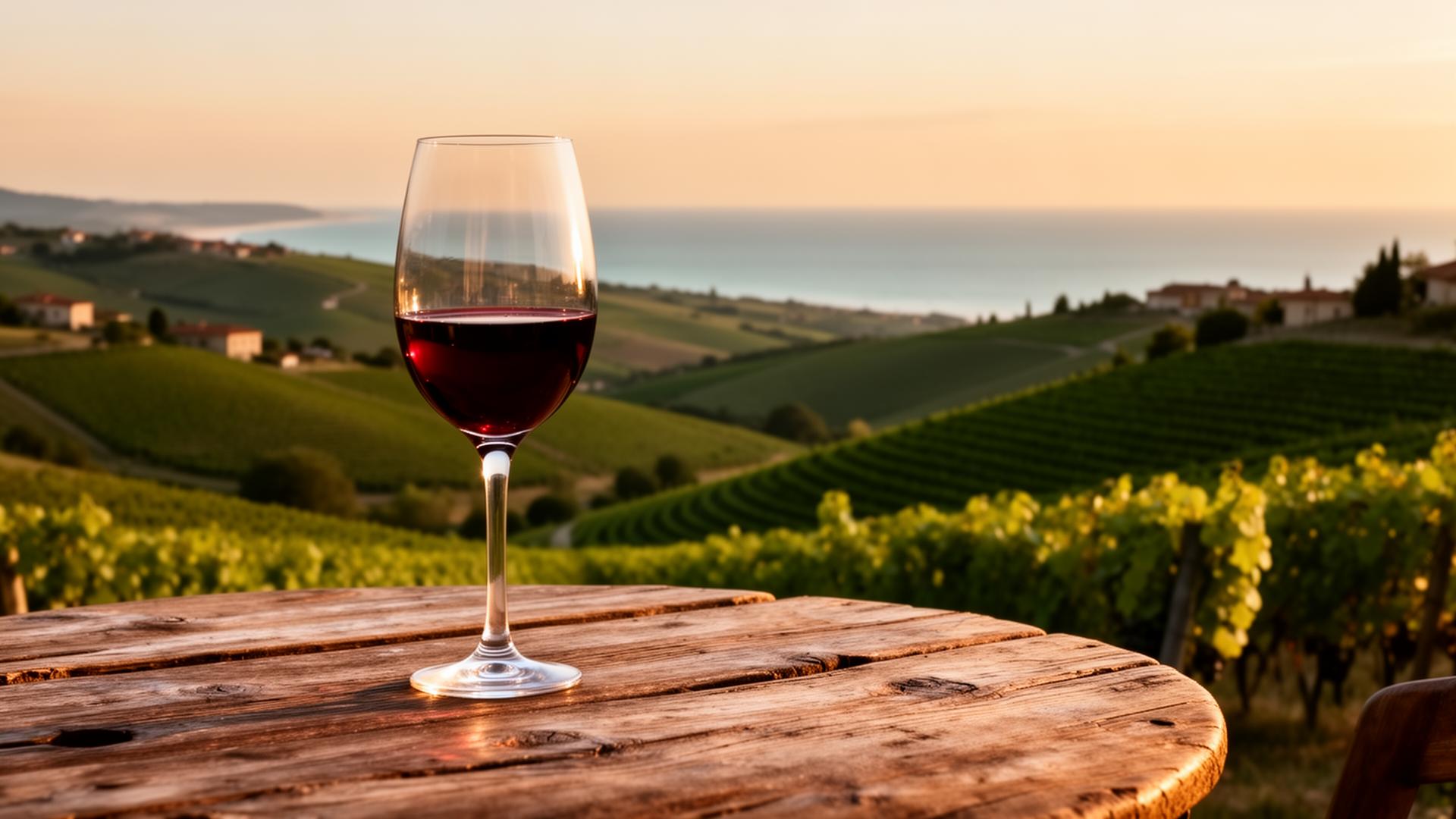
The Marche is the kind of Italian wine region that experienced buyers mention with a small, knowing smile. It does not have the global brand recognition of Tuscany or Piedmont, nor the marketing budget of Veneto, yet it produces wines of remarkable precision, freshness and value. Stretched between the Apennine ridge and the Adriatic coast, the region is shaped by two opposing forces — mountain altitude and sea breezes — that give its wines a tension you rarely find elsewhere in central Italy.
1. A region defined by contrasts
The Marche covers a narrow strip of central-eastern Italy, with the Apennines to the west and roughly 180 kilometres of Adriatic coastline to the east. Vineyards climb from sea level up to 500 metres, on soils that mix clay, limestone, sandstone and ancient marine sediments. The diurnal range is wide, the light is bright, and the salty Adriatic wind reaches deep inland — a combination that produces aromatic whites with real backbone and reds that are structured but never heavy.
2. Verdicchio: Italy's most underrated white
If the Marche has a flagship, it is Verdicchio. Two appellations — Verdicchio dei Castelli di Jesi and Verdicchio di Matelica — produce some of the most age-worthy white wines in Italy. Castelli di Jesi, closer to the coast, gives wines of saline freshness, citrus and almond, with a bitter-twist finish that pairs beautifully with seafood. Matelica, grown in a closed inland valley with no maritime influence, gives a more vertical, mineral, almost Riesling-like style that ages for a decade or more.
- Verdicchio dei Castelli di Jesi DOC and Riserva DOCG — saline, citrus, almond, sea-air freshness
- Verdicchio di Matelica DOC and Riserva DOCG — vertical, mineral, age-worthy, lower yields
- Sparkling Verdicchio (Classico Method) — an emerging category gaining traction in premium retail
- Late-harvest and passito styles — small production, niche export demand
3. The reds: Rosso Conero, Rosso Piceno and Lacrima
The reds of the Marche are built around two great grapes — Montepulciano and Sangiovese — but the way they are blended, and where they are grown, gives each appellation a distinct identity.
Rosso Conero and Conero Riserva DOCG
Grown on the limestone slopes of Monte Conero, just south of Ancona, this is Montepulciano in its most elegant expression: deep colour, dark fruit, fine tannin, and a savoury, almost saline finish from the proximity of the sea. The Riserva DOCG is one of the most under-priced serious reds in Italy.
Rosso Piceno and Piceno Superiore
A blend of Montepulciano and Sangiovese from the southern Marche. Approachable, food-friendly, with red fruit, soft spice and a Mediterranean warmth. The Superiore comes from a smaller, hillier zone and shows more depth and ageing potential.
Lacrima di Morro d'Alba DOC
A tiny appellation around the village of Morro d'Alba, producing one of the most aromatic red wines in Italy: violet, rose petal, blackberry, almost Gewürztraminer-like on the nose, with soft tannins and immediate drinkability. A by-the-glass star for sommeliers looking for something different.
4. Other grapes worth knowing
- Pecorino — a high-altitude white grape rescued from near-extinction, now producing structured, citrus-driven wines with serious export momentum
- Passerina — fresher and lighter than Pecorino, ideal for everyday by-the-glass programmes
- Vernaccia di Serrapetrona DOCG — a rare red sparkling wine, dry or sweet, made from partially dried grapes
- Bianchello del Metauro — a crisp, coastal white from the northern Marche, perfect with fried fish
5. Why the Marche works for export in 2026
International buyers in 2026 are looking for three things: distinctive identity, honest pricing, and wines that work both by the glass and on a serious list. The Marche delivers on all three. The region is not yet over-priced, the producers are predominantly small and family-run, and the styles — fresh saline whites, elegant Mediterranean reds — fit the direction modern wine programmes are moving in.
- Premium retail in Northern Europe is actively looking for age-worthy alternatives to Burgundy and German Riesling — Verdicchio di Matelica fits perfectly
- Sommeliers in the US, UK and Scandinavia want lighter, more digestible Italian reds — Rosso Conero and Lacrima answer that demand
- Asian markets (Japan, South Korea) reward whites with precision and minerality — coastal Verdicchio is gaining placements
- EXW pricing remains competitive compared to equivalent quality in Tuscany or Piedmont, leaving real margin for the importer
6. The export conversation today
For importers building or refreshing an Italian portfolio, the Marche is one of the most strategic additions available right now. It complements rather than competes with the major Tuscan and Piedmontese appellations, opens new by-the-glass conversations, and offers genuine discovery for the end consumer. The region is small enough to remain authentic, but mature enough to deliver consistent quality and reliable logistics.
The Marche is the Italian region that experienced buyers add to their portfolio quietly, before everyone else does.
Between the mountains and the sea, the Marche keeps producing wines of clarity, freshness and value. For importers and sommeliers paying attention, this is the moment.