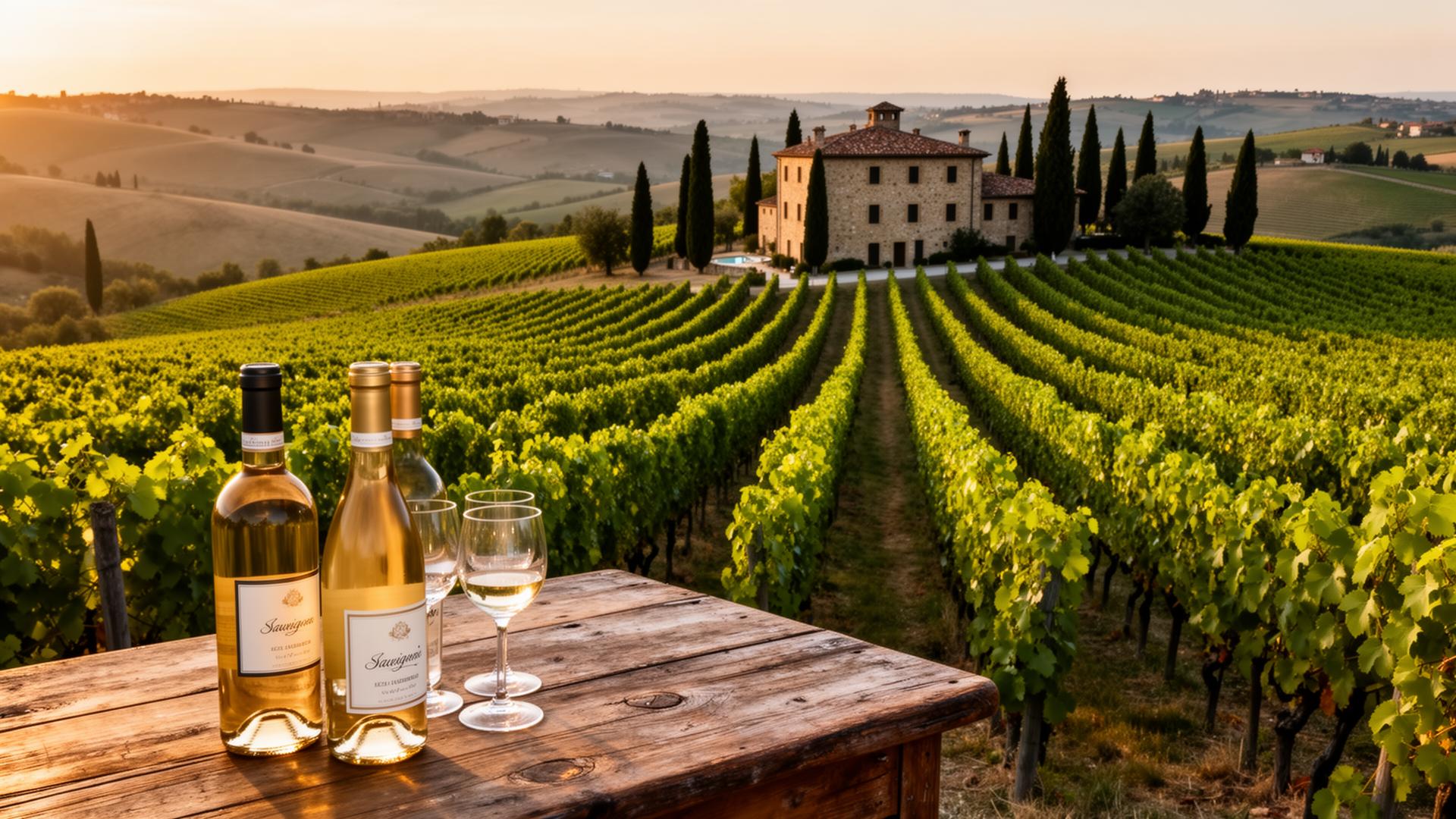
Selling Premium Italian Wine in Switzerland: A Compact, High-Value Market
Switzerland is one of the most lucrative export destinations for premium Italian wine: high purchasing power, deep wine culture and a fragmented distribution system that rewards quality, storytelling and patient relationships.

With just 8.8 million inhabitants, Switzerland punches well above its weight in the global wine trade. Per-capita wine consumption sits around 31 litres per year, and Italy is consistently the country's number-one supplier by both volume and value. For premium and fine wine producers, the Swiss market combines three rare qualities: high disposable income, sophisticated wine culture, and a willingness to pay for authenticity.
1. Market size and the role of Italian wine
Switzerland imports roughly two thirds of the wine it consumes. Italy alone covers around 40% of total imports, ahead of France and Spain, with a strong skew toward Tuscan, Piedmontese and Venetian reds. The premium segment — bottles retailing above CHF 25 — has shown the most resilience over the last five years, while entry-level wine has been squeezed by inflation and changing consumption habits.
2. The four pillars of Swiss wine distribution
- Large retail (Coop, Migros, Denner, Manor): high volumes, tough margins, but unmatched visibility
- Premium retail and department stores (Globus, Mondovino, Vinothek brands): the natural home for fine Italian wine
- Independent specialists and online players (Flaschenpost, Mövenpick Wein, Baur au Lac Vins, Smith & Smith): curated lists, strong sommelier influence
- HoReCa: Michelin-starred restaurants, hotels in Zurich, Geneva, Zermatt, St. Moritz — the showcase channel for top labels
3. Three markets in one country
Switzerland is not a single market: each linguistic region behaves differently. German-speaking Switzerland (Zurich, Basel, Bern) is the largest and most structured, with a strong appetite for Tuscan classics and Amarone. French-speaking Switzerland (Geneva, Lausanne) is more Francophile but increasingly open to Piedmontese and high-end Tuscan reds. Italian-speaking Ticino has a deep cultural connection to Italy and acts as a natural gateway, especially for boutique producers.
4. Duties, VAT and the practical side of import
Switzerland is outside the EU, so each shipment requires customs clearance. Still wine in bottles up to 2 litres is taxed at CHF 60 per 100 kg gross, plus the standard VAT of 8.1% applied on the CIF value plus duty. A monopoly tax also applies to spirits but not to still wine. The paperwork is straightforward when handled by an experienced Swiss importer, and most premium operators work on DDP or DAP terms to simplify the producer's side.
5. Pricing logic and margins
Swiss importers typically work with a coefficient of 2.0–2.5x on the EXW price to reach the wholesale price, and retailers add another 30–45% to land on shelf. A wine leaving the cellar at EUR 12 EXW will easily retail between CHF 38 and CHF 48. This long chain rewards wines with a clear identity, strong scores and recognisable brands; commodity wines struggle to defend a fair margin.
6. Swissness, sustainability and storytelling
Swiss buyers — both trade and consumer — increasingly ask for organic certification, biodynamic practices and clear environmental commitments. Family ownership, generational continuity and a coherent visual identity weigh more than flashy marketing. A producer who can tell a precise story about terroir, vintage and people will always have an advantage over a generic premium label.
7. Five practical recommendations for Italian producers
- Pick one linguistic region first and build distribution depth before expanding
- Work with a single, well-aligned importer per region — multi-importer setups erode price and trust
- Invest in HoReCa visibility: a strong by-the-glass listing in Zurich or Geneva drives retail demand
- Be present at ProWein Düsseldorf and Expovina Zurich — Swiss buyers attend both
- Protect your price positioning: discounting in Switzerland is fast to do and slow to undo
8. Conclusion
Switzerland will never be a volume market, but for premium Italian wineries it remains one of the most profitable, stable and reputation-building destinations in the world. Producers who approach it with patience, the right partner and a clear premium positioning find in Switzerland a market that genuinely values what they make.