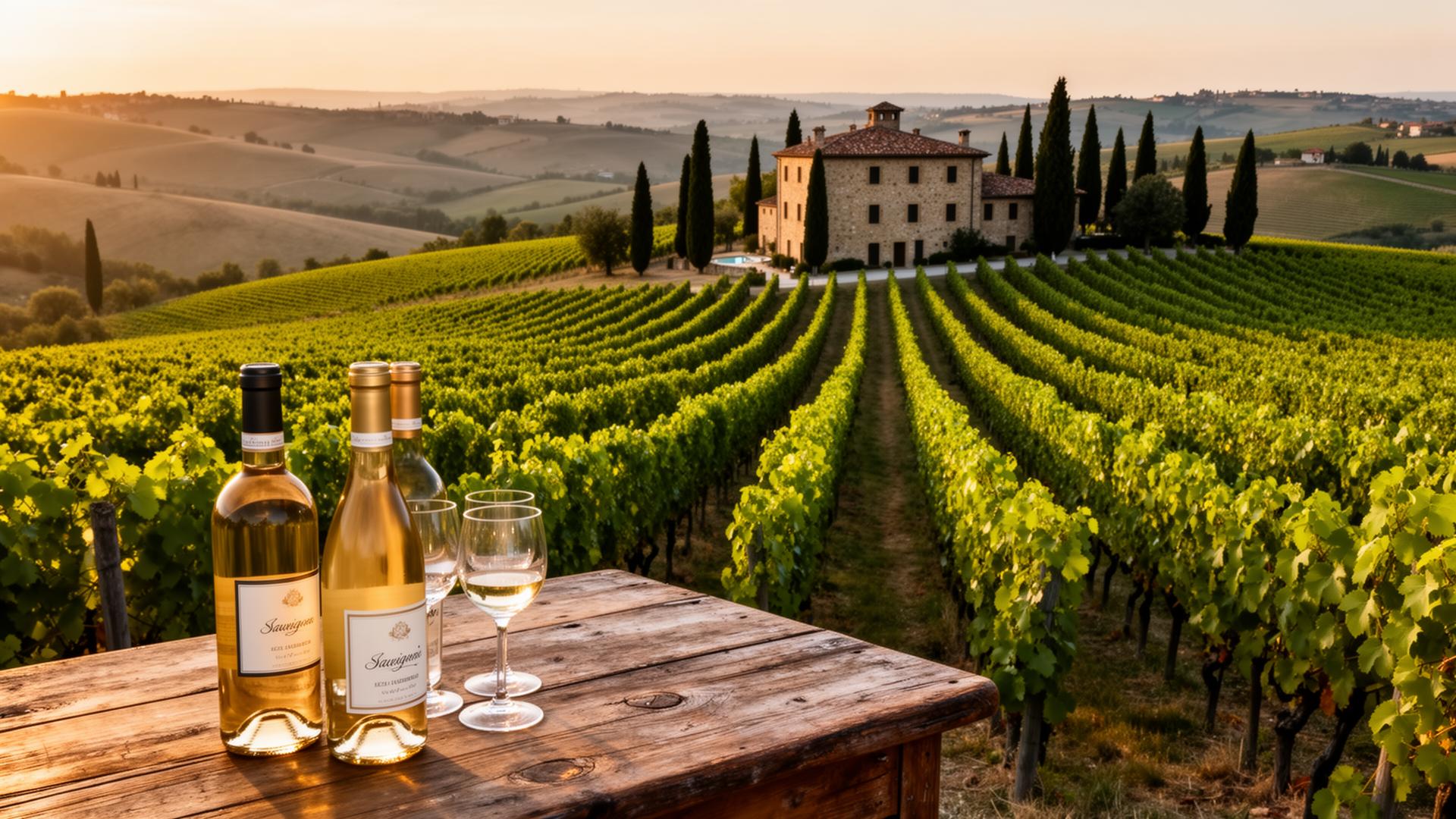
Italian Wine in Lithuania: A Small but Strategic Market for Producers in 2026
Why Lithuania — small in population, sophisticated in taste — has quietly become one of the most rewarding entry points for Italian wineries in the Baltics.

Lithuania is rarely on the first page of any Italian winery's export plan. With a population of just under 2.9 million, it cannot match the volumes of Poland or the prestige of Scandinavia. Yet for producers willing to look closely, Lithuania has quietly become one of the most rewarding entry points into the Baltics — a market where Italian wine is not just present, but actively preferred by an emerging generation of premium consumers.
1. The size of the prize
Wine consumption per capita in Lithuania has grown steadily over the past decade, moving from a beer-and-spirits culture toward a more diversified drinking pattern. Still wine now accounts for roughly 18–20 litres per adult per year — modest by Mediterranean standards, but significant when paired with rising disposable income in Vilnius, Kaunas and Klaipėda.
Italy consistently ranks among the top three countries of origin for imported wine in Lithuania, alongside France and Spain. In value terms, Italian wine has gained share over the last three years, driven almost entirely by two categories: Prosecco DOC and premium Tuscan and Piedmontese reds.
2. What Lithuanian buyers are actually drinking
The Italian wine portfolio that works in Lithuania today is narrower and more premium than most producers expect:
- Prosecco DOC and DOCG — the dominant Italian sparkling reference, both on retail shelves and in HoReCa
- Pinot Grigio delle Venezie — the default by-the-glass white in mid and upper HoReCa
- Chianti Classico and Chianti DOCG — the entry point into Italian reds for most consumers
- Brunello di Montalcino, Barolo and Amarone — clearly recognised as 'occasion' wines, often gifted
- Primitivo, Negroamaro and Nero d'Avola — growing fast in the €8–14 retail bracket as friendly, fruit-driven reds
Lower-priced bulk and own-label Italian wine exists, but the real opportunity for cantine is firmly in the €5–25 EXW bracket, where the market is willing to pay for clear regional identity and a recognisable denomination.
2.1 Sweet, semi-sweet and natural — three niches worth knowing
Beyond the mainstream, three smaller categories punch above their weight in Lithuania and are often overlooked by Italian producers focused on dry premium wines:
- Sweet and semi-sweet wines — there is still a meaningful consumer base, particularly outside Vilnius, that prefers off-dry whites and lightly sweet reds; Moscato d'Asti, Lambrusco amabile and lightly sweet rosés all find a stable home in retail
- Sparkling beyond Prosecco — Asti DOCG, Lambrusco and Italian Metodo Classico are gaining listings in restaurants looking to differentiate from the Prosecco wall
- Organic and 'natural' wines — Vilnius has a small but very engaged on-trade scene around natural wine, with several specialist bars and bistros that actively seek out small Italian producers working with low-intervention methods
3. The importer landscape
The Lithuanian wine import market is concentrated. A handful of established distributors — including the wine arms of the major beverage groups — control the bulk of HoReCa and retail listings. Alongside them, a growing layer of specialist importers focused on premium, organic and small-estate Italian wine has emerged in Vilnius over the last five years.
For an Italian winery, this means two viable entry strategies:
- Volume route: partnering with one of the large distributors for retail listings (Maxima, IKI, Lidl, Rimi) and broad HoReCa coverage — fast scale, but tight margins and limited brand control
- Premium route: working with a specialist importer focused on independent restaurants, wine bars and direct-to-consumer fine wine retail — slower volume build, but stronger price discipline and brand storytelling
4. HoReCa: Vilnius is doing the heavy lifting
The transformation of Vilnius's restaurant scene over the past decade is the single most important driver of premium Italian wine demand in Lithuania. The city now hosts several Michelin-recognised restaurants and a dense layer of wine-led bistros and natural wine bars. Wine lists in this segment routinely include 30–60 Italian references, with markups in line with Western European norms (2.5–3.5x on premium bottles).
Kaunas and Klaipėda follow a similar trend with a 12–24 month lag. Outside the three main cities, HoReCa wine consumption thins out quickly and the format shifts toward retail and gifting.
5. Pricing, taxes and the real shelf reality
Lithuania applies the standard EU framework for still and sparkling wine, with national excise duty on still wine currently around €164 per hectolitre and 21% VAT. Compared to Scandinavia or the UK, the tax burden is moderate, which keeps the gap between EXW price and retail shelf price relatively contained.
Indicative retail price points where Italian wine actively sells:
- Everyday Italian reds (Chianti, Primitivo, Nero d'Avola): €7–12 retail
- Premium DOC/DOCG (Chianti Classico, Valpolicella Ripasso, Vermentino di Sardegna): €13–22 retail
- Prestige (Brunello, Barolo, Amarone, Super Tuscan): €35–80 retail, occasionally above
- Prosecco DOC: €9–14 retail; DOCG and Cartizze: €18–28
6. Marketing, language and consumer culture
Lithuanian consumers respond strongly to clear regional identity (Toscana, Piemonte, Sicilia, Veneto are well understood) but less so to abstract brand storytelling. Practical, denomination-led communication works better than lifestyle messaging. English is widely spoken in the trade, but back labels in Lithuanian — although not legally required for EU origin wine in the same restrictive way as some non-EU markets — are increasingly appreciated by retailers.
Tasting events, winemaker visits and trade-led masterclasses still carry significant weight. The local trade is small enough that two well-organised days in Vilnius can put a winery in front of a meaningful share of relevant buyers.
7. A practical playbook for Italian wineries
- Treat Lithuania as the entry point into the Baltics, not as a standalone — a credible Lithuanian importer can open doors in Latvia and Estonia within 12–18 months
- Lead with one clear hero SKU per category (one Prosecco, one entry red, one premium red) rather than a sprawling portfolio
- Be ready to support the importer with at least one annual visit, ideally combining HoReCa tastings in Vilnius with a trade masterclass
- Price with the full Baltic in mind — significant divergence between Lithuania, Latvia and Estonia damages the importer's regional plans
- Protect the premium tier: avoid parallel listings between a volume distributor and a specialist importer on the same SKUs
Lithuania will not transform any winery's turnover overnight. But for producers building a coherent Northern and Eastern European footprint, it offers something rare: a small, transparent market where quality Italian wine is genuinely respected, decisions are made quickly, and a single strong partner can deliver visible results within the first year.
In Lithuania, the size of the country is not the size of the opportunity — the size of the opportunity is the quality of the partner you choose.