Italian Wine Export Trends: Top Destinations and Emerging Markets
A data-driven look at where Italy ships its wine — from the dominant US and German markets to fast-growing opportunities in Asia and Eastern Europe.
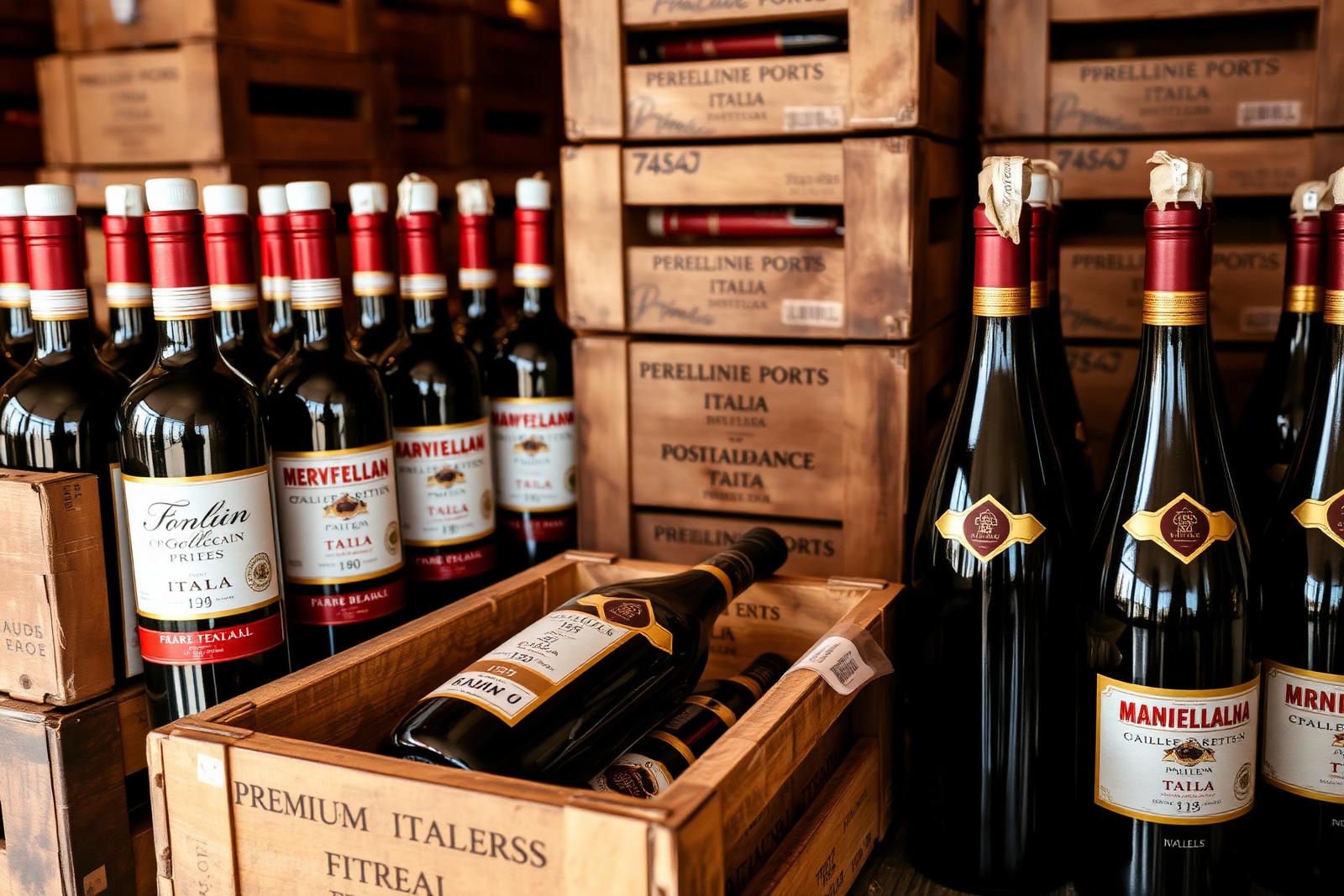
Italy is the world's largest wine producer by volume and, in most years, its largest exporter. In 2025 Italian wineries shipped roughly 22 million hectolitres abroad for a total export value approaching €8.2 billion, according to ISTAT and Osservatorio UIV-Vinitaly. The headline numbers, however, hide a more interesting story: a handful of mature markets carry most of the revenue, while a second tier of emerging destinations is quietly reshaping where Italian wine grows next.
1. Where does Italy export wine today?
Three countries account for more than half of Italian wine export value: the United States, Germany and the United Kingdom. Together they represent the historical backbone of the trade — well-organised distribution, a developed on-trade, and consumers who already understand Italian regional categories like Prosecco, Chianti, Brunello and Amarone.
- United States — ~€2.0 billion, roughly 25% of total export value. Prosecco, Pinot Grigio and Tuscan reds lead, with a clear premiumisation trend above $20 retail.
- Germany — ~€1.2 billion. The largest market by volume; price-sensitive in retail but a growing premium segment in independent wine shops.
- United Kingdom — ~€850 million. Prosecco-driven, but Italian still wines are gaining shelf space as Bordeaux and Bourgogne pricing alienates mid-market buyers.
- Canada — ~€500 million. Monopoly-led market with strong demand for structured reds from Veneto, Piedmont and Tuscany.
- Switzerland, France, Netherlands, Belgium — combined ~€1.1 billion. Mature, stable, with steady premium demand.
2. Emerging markets to watch
Outside the top ten, several markets are growing in double digits year-over-year and starting to matter for medium-sized estates building a portfolio with a long horizon.
Asia
South Korea has overtaken Japan as the most dynamic Asian market for Italian wine, with imports up roughly 18% in 2025. Premium Tuscan and Piedmontese reds dominate the on-trade in Seoul, supported by a young, well-travelled consumer base. Japan remains the largest Asian buyer in absolute terms but is growing more slowly; China continues to recover unevenly from its 2020-2023 contraction, with opportunity concentrated in tier-1 cities and cross-border e-commerce.
Eastern Europe
Poland, the Czech Republic and the Baltics — particularly Lithuania — are growing fast from a small base. These markets reward producers who can offer mid-tier price points (€8–€15 wholesale) and a small but well-curated range. Distribution is concentrated, decisions are made quickly, and the on-trade is rebuilding around Italian classics.
The Americas, beyond the US
Brazil, Mexico and Colombia are the three Latin American markets gaining the most ground for Italian wine. Tariffs and logistics remain barriers, but a growing premium HoReCa segment and the entry of specialist importers are creating sustainable demand for structured reds and Prosecco.
3. What is driving the shift?
Three forces are reshaping the export map: premiumisation in mature markets, a generational rotation toward lower-alcohol and indigenous-grape wines, and the consolidation of distribution in fewer, larger importers. Wineries that win in 2026 are those that match a clear positioning to the right channel — independent retail and HoReCa in mature markets, exclusive importers in emerging ones.
Italian wine no longer sells itself on flag alone. The premium it commands abroad now depends on story, place and consistency — the three things a small or mid-sized estate can actually control.
4. Practical implications for wineries
- Treat the US, Germany and the UK as portfolio cornerstones — but expect margin pressure and rising marketing investment to defend shelf space.
- Choose one or two emerging markets per planning cycle; building distribution in five at once dilutes attention and budget.
- Invest in trade visits at least once a year per market — personal relationships still drive Italian wine import decisions, especially in Asia and Latin America.
- Register trademarks early in any new market, particularly in China, Brazil and Colombia where premium Italian labels are routinely copied.
- Build a pricing architecture that survives layered import duties, VAT and distributor margin — a wine that works at €12 ex-cellar rarely lands at €18 retail in Berlin and $40 retail in New York at the same time.
5. The outlook for 2026
The base case for 2026 is low single-digit growth in export value, with volume flat and price-mix continuing to improve. Risk is concentrated in two areas: tariff exposure in the United States, and currency volatility against the dollar and the pound. The opportunity is in the second tier — markets that today represent 3-5% of an estate's revenue but could double inside three years if cultivated patiently.
For Italian wineries planning international growth, the question is no longer whether to export but how to sequence it. Choose markets that match your range, build distribution slowly, and treat each one as a multi-year commitment rather than an opportunistic shipment.