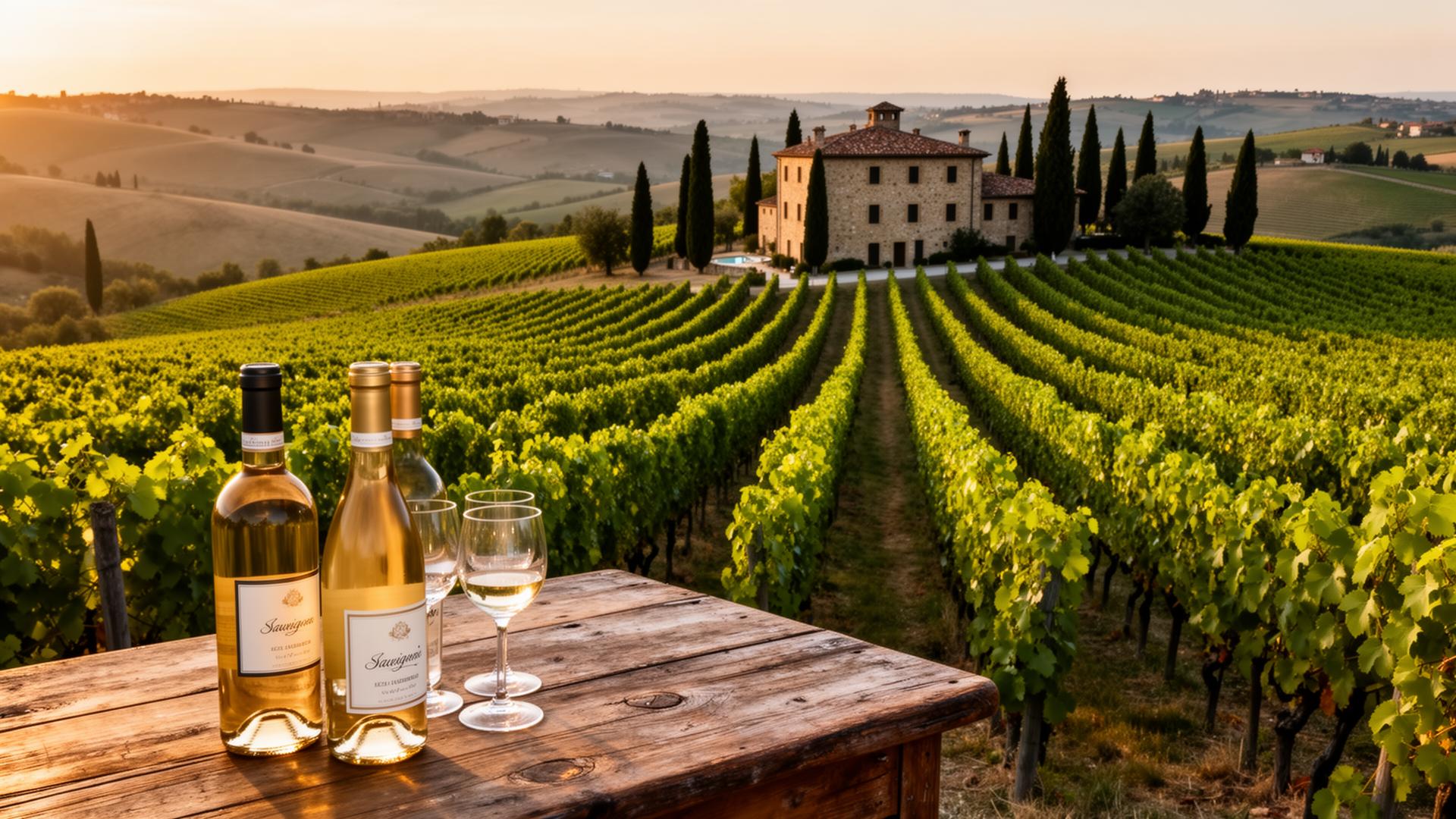
Consorzio Vini Terre di Pisa: The Quiet Renaissance of Pisan Wine
Founded in 2018, the Consorzio Vini Terre di Pisa unites the leading estates of the province around the Terre di Pisa DOC — a small but ambitious appellation built on Sangiovese, international varieties and a distinctive Pliocene terroir.
Between the Tyrrhenian coast and the rolling hills that climb toward the Chianti, the province of Pisa has quietly become one of the most interesting wine territories in Tuscany. Long overshadowed by Montalcino, Bolgheri and the Chianti Classico, Pisan viticulture has finally found a unified voice with the Consorzio Vini Terre di Pisa, founded at the end of 2018 by a group of producers determined to give structure and visibility to the area's finest wines.
1. The birth of the Consorzio
The Consorzio Vini Terre di Pisa was established to protect, promote and valorise the Terre di Pisa DOC — an appellation created in 2011 to represent the highest expression of Pisan wine. Beyond promotion, the Consorzio coordinates with public authorities on commercial vigilance, proposes updates to the production rules, and represents its members at the major international trade fairs, from Vinitaly to ProWein.
2. The Terre di Pisa DOC
The DOC covers a wide arc of the province, on Pliocene marine sediments rich in clay, sand, fossil shells and limestone. Sangiovese is the backbone, but the disciplinare also allows complementary varieties — Cabernet Sauvignon, Merlot, Syrah — and a structured Sangiovese-based red labelled simply Terre di Pisa Rosso, alongside the more selective Terre di Pisa Sangiovese, which requires a minimum 95% of the grape and at least 24 months of ageing.
- Terre di Pisa Rosso DOC — Sangiovese-based blend with Cabernet, Merlot or Syrah
- Terre di Pisa Sangiovese DOC — minimum 95% Sangiovese, longer ageing, the flagship style
- Pliocene soils with marine fossils, clay and sand — saline, fine-grained tannins
- Climate moderated by the Tyrrhenian sea and the Pisan hills
3. The member estates
The Consorzio brings together the most representative producers of the province. Each estate has its own identity, but together they sketch a coherent portrait of contemporary Pisan wine — precise, fresh, structured but never heavy.
- Azienda Agricola degli Azzoni Avogadro Carradori — historic noble estate with a rigorous approach to Sangiovese
- Badia di Morrona — one of the largest and most established estates of the area, near Terricciola
- Azienda Agricola Castelvecchio — small family producer working with Sangiovese and international varieties
- Fattoria Fibbiano — organic certified, known for its old-vine Sangiovese and Ciliegiolo
- Tenuta di Ghizzano — Ginevra Venerosi Pesciolini's biodynamic estate, a benchmark for the DOC
- I Giusti & Zanza — modern, polished reds including the iconic Dulcamara (Cabernet/Merlot)
- Podere Pellicciano — boutique estate with a focused range of Sangiovese-based wines
- Podere La Chiesa — small artisanal producer with a strong terroir-driven approach
- Podere Borgaruccio — emerging name within the DOC
- Azienda Agricola Pietro Beconcini — celebrated for the rediscovery of Tempranillo planted along the ancient Via Francigena
- Marina Romin — micro-production focused on quality and authenticity
- Podere Spazzavento — coastal-influenced estate with a clean, vibrant style
- Fattoria Uccelliera — historic producer with a wide portfolio of Tuscan classics
- Fattoria Varramista — Piaggio family estate, famous for its Syrah-led Varramista wine
- Azienda Agricola Vallorsi — recent addition focused on terroir-driven reds
- Fattoria Villa Saletta — large historic estate with significant investment in vineyard renewal and modern winemaking
4. A style of its own
What distinguishes the wines of the Terre di Pisa DOC is a particular balance between Tuscan structure and Mediterranean freshness. The proximity of the sea, the marine-origin soils and a wide diurnal range produce Sangiovese with bright red fruit, fine tannins and a saline, almost mineral finish. International varieties, where used, tend to integrate with restraint rather than dominate. The result is a regional style that is recognisable, food-friendly and — crucially for export — clearly distinct from neighbouring appellations.
5. Export potential
For importers and sommeliers searching for Tuscan wines with a clear identity, fair pricing and a credible territorial story, the Terre di Pisa DOC is one of the most compelling propositions in central Italy today. Production volumes are still small, allocations are manageable, and the average quality across the Consorzio's members is remarkably high. The presence of leading names such as Ghizzano, Varramista, Fibbiano, I Giusti & Zanza and Beconcini gives the appellation immediate critical credibility, while smaller estates offer the kind of discoveries that on-trade buyers value most.
Pisan wine has spent decades in the shadow of its more famous neighbours. With the Consorzio Vini Terre di Pisa, it finally has a unified voice — and it deserves a serious listen.
The Terre di Pisa DOC is not chasing trends. It is building a long-term identity, estate by estate, vintage by vintage. For markets ready to look beyond the most established Tuscan labels, this is one of the most interesting stories of the next decade.